
SPINE TUMORS
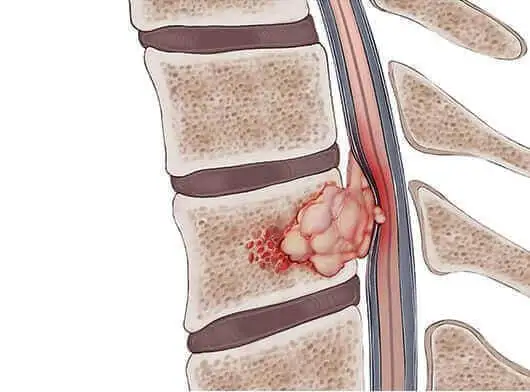
Spinal tumors are masses that form within the bones of the spine or in the spinal cord, often originating from nerve tissue. These masses can arise from the spine or spinal cord itself, or they may be metastases from tumors that have developed elsewhere in the body.
Symptoms of spinal tumors vary depending on their location. The most common symptom is back pain. If the tumor exerts pressure on the spinal cord or nerve structures, symptoms like weakness, numbness, pain in the arms and legs, urinary incontinence, and sexual dysfunction may occur. Tumors within the bone may also compromise the integrity of the spine, leading to fractures or curvatures such as scoliosis or kyphosis.
Diagnosis begins with a history and physical examination by a specialist. Patients may have a prior history of cancer or be undergoing treatment. In the second stage, imaging techniques like X-rays, CT, MRI, scintigraphy, or PET scans can be used to detect the tumor and determine its spread. If imaging confirms a tumor, a biopsy is needed to determıne its type and origin. Depending on the tumor’s location, a biopsy may be done with local anesthesia using imaging techniques like CT or ultrasound, or an open biopsy may be performed under general anesthesia.
Treatment options vary based on the tumor’s type and location. Surgery, radiotherapy, chemotherapy, and immunotherapy can be used alone or in combination. In some cases, close monitoring may be chosen instead. Decisions are typically made in collaboration with spinal surgeons, radiologists, and oncologists. Benign tumors without symptoms can often be monitored regularly. Surgical removal is generally recommended for tumors causing neurological symptoms or posing a fracture risk. Radiotherapy, chemotherapy, and immunotherapy may also be used before or after surgery, depending on the tumor type.