
PEDIATRIC SPINE PROBLEMS
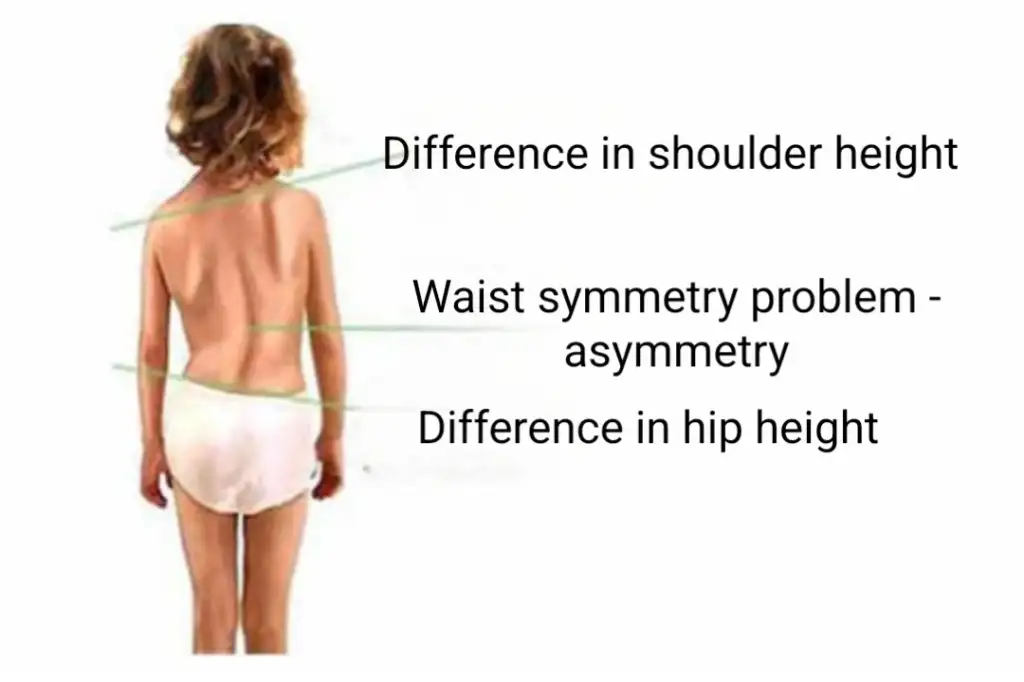
Congenital scoliosis
Congenital scoliosis is a deformity that occurs due to anomalies in the spine that occur in the womb during the embryological period. These missing or abnormal developments in the spine occur in the first six weeks of embryological formation. Although congenital scoliosis refers to the presence of scoliosis at birth, it is actually disorders in the spine that are present in patients at birth. Scoliosis develops later in these patients. Although the diagnosis is often made in infancy, when walking is just beginning, in some children the diagnosis takes until the teenage years. In congenital cases, if the asymmetric growth in the vertebrae is sideways, scoliosis occurs, and if there is an increase forward, kyphosis occurs.
Symptoms of congenital scoliosis
- Increased hair growth, especially in the patient’s waist area.
- Changes in skin color.
- Bone protrusion that can be detected manually in the back area.
- The trunk is shorter than the legs.
- The vertebrae are not aligned properly when viewed from the back.
Why does congenital scoliosis occur?
Although there is no clear data on the incidence of congenital scoliosis, it is known to be rarer than idiopathic scoliosis. Additionally, studies conducted to date have not proven the existence of a genetic predisposition to congenital scoliosis. Various causes of congenital scoliosis are cited, such as infections in the womb, diabetes that the mother had before or started during pregnancy, heart diseases, hyperthermia, alcohol use, valproic acid use, and vitamin and mineral deficiencies in the body. However, it can be seen that some hereditary diseases accompany congenital scoliosis. Structural disorders can cause congenital scoliosis in several ways. Structural problems that occur in the womb manifest themselves as formation defects and separation defects in the vertebrae. In some patients, it is possible to see both defects together. When viewed from the front, the vertebrae are short cylinders stacked on top of each other. When a triangle-shaped half vertebra appears between the vertebrae stacked on top of each other, the spine bends in this direction, resulting in scoliosis. Again, the vertebrae lined up on top of each other are stuck together on one side and do not grow; On the non-attached side, congenital scoliosis occurs as the vertebrae grow larger. In some cases, adhesion occurs on both sides of the vertebrae. In such a case, although scoliosis does not occur in that area, this area may remain short. Another problem that may arise is hunchback (kyphosis). In this case, while the vertebrae cannot grow because they are attached at the front, growth continues at the back, resulting in a hunchback. The opposite may also occur. In other words, if the vertebrae are attached at the front and growth continues from the back, lordosis occurs. Depending on the shape and severity of the deficiencies in the spine, the deformity can reach serious levels. Another important feature of congenital scoliosis is that it is accompanied by anomalies of the spinal cord, kidneys and heart. In congenital scoliosis, accompanying abnormalities can be seen in the spinal cord (41%), heart (7-12%) and kidney (20%).
What is the course of congenital scoliosis?
In congenital scoliosis, which is generally progressive, although the baby is born with an abnormal spine, no curvature may be observed initially. Curvature usually manifests itself as growth continues. In some cases, the course of the curvature progresses extremely slowly until the rapid growth phase in adolescence. For this reason, parents need to be extremely careful in terms of early diagnosis of congenital scoliosis. Families should consult a physician immediately if they notice any imbalance or difference in the baby’s neck, back or waist. Treatment of congenital scoliosis that occurs in the early stages may require surgical intervention at a young age. In addition, children with congenital scoliosis may develop secondary spinal curvature to ensure body integrity and balance above or below the curvatures caused by spinal abnormalities. In fact, since this curvature may reach larger sizes than the primary curvature over time, it is necessary to monitor the curvatures regularly after the diagnosis is made.
Evaluation of a congenital scoliosis patient
In cases of congenital scoliosis, the deformity may be accompanied by spinal cord and nervous system abnormalities. In cases of congenital scoliosis, Spina Bifida, also known as spinal gap problem, is often seen together. For this reason, it is beneficial to examine children who show signs of spinal deformity in the newborn period in terms of spinal anomalies. If a spinal anomaly is suspected during the checks carried out in the womb during pregnancy, the scars should be followed in the neonatal period. In addition, during routine newborn health screenings or for other reasons,